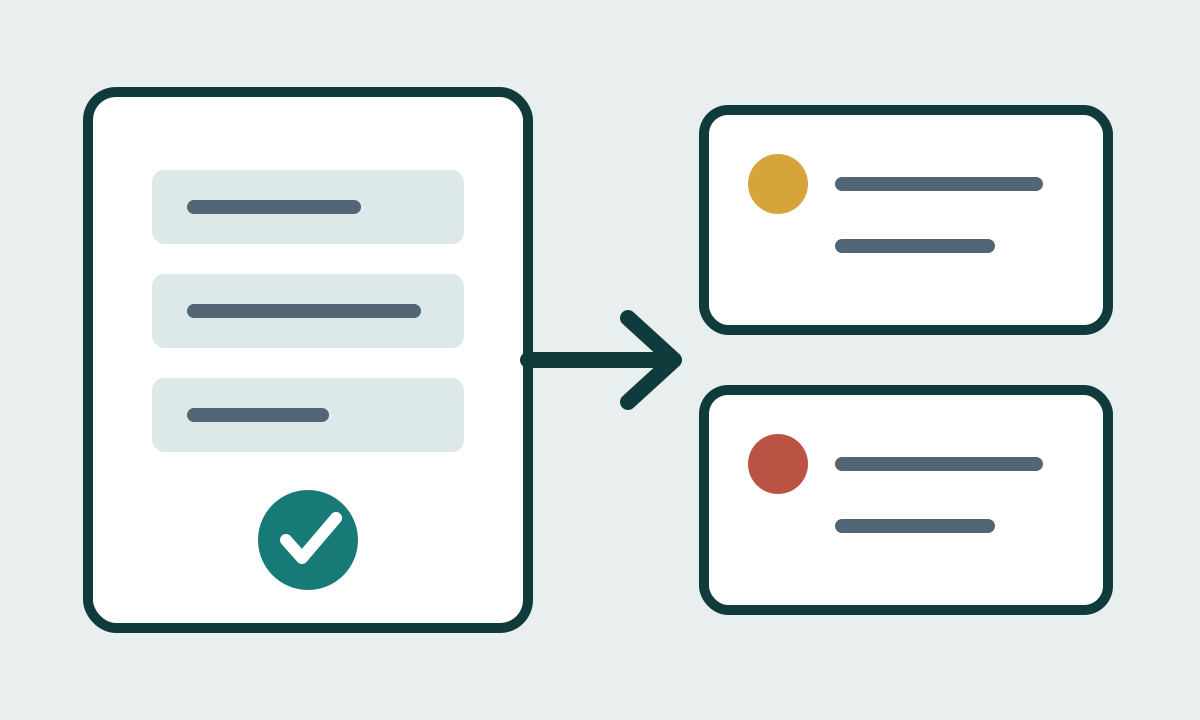
Bankruptcy preparation checklist
Organize a bankruptcy question before choosing a legal path
Bankruptcy is a federal court process with significant financial and legal consequences. A useful first conversation starts with an accurate household, income, debt, property, collection, and prior-filing overview, not a promise that one chapter is right.
Private public pilot: no law firm receives your request while distribution remains closed.
Direct answer
A lawyer needs the complete financial picture before discussing options
A bankruptcy lawyer may review Chapter 7, Chapter 13, non-bankruptcy alternatives, collection lawsuits, foreclosure, repossession, garnishment, taxes, secured debts, and property concerns. Eligibility, exemptions, discharge, timing, and consequences require fact-specific legal advice.
Choose the closest issue
Start with the category that best describes what is happening
The label only organizes the request. It does not decide the legal issue, eligibility, strategy, or outcome.
Create a complete inventory
List every debt and property category, not only the urgent bill
Group mortgages, vehicle loans, taxes, student loans, credit cards, judgments, support obligations, leases, and other debts. Also list real estate, vehicles, accounts, business interests, claims, and recent transfers without posting account numbers.
Prepare household income
Income and expenses require an accurate time period
Gather pay, benefit, business, retirement, support, and other income records along with ordinary household expenses. A lawyer can explain which periods and documents apply.
Flag active collection events
Lawsuits, sales, garnishments, and repossessions affect timing
List the court or agency, case status, scheduled event, and latest notice. Do not assume that an online request or a future filing will stop an event.
Before you begin
Build a bankruptcy conversation worksheet
Accuracy matters. Do not hide assets, debts, transfers, income, or prior cases from counsel.
- List all debts and collection actions by category.
- List property, accounts, claims, and recent transfers.
- Prepare household income and ordinary expense records.
- Record prior bankruptcy cases and all upcoming legal events.
Public-pilot boundary
Know what happens before you share information
Private and verified. The existing intake asks for general facts and verifies the email address you control.
Not distributed. No law firm receives your request while lawyer distribution remains closed.
No legal relationship. A request is not legal advice and does not create representation or protect a deadline.
One clear starting point
Describe the general facts in a verified private request
Choose the closest legal area, add location and timing, and verify one email address. Keep confidential records and private identifiers out of the form.
Public sources
Context from identifiable public institutions
These sources support national context and preparation guidance. They do not replace state-specific legal advice.
Last reviewed: July 22, 2026
- Bankruptcy BasicsAdministrative Office of the U.S. Courts overview of bankruptcy and its federal court process.
- Chapter 7 and Chapter 13 ResourcesOfficial federal court explanations of common consumer bankruptcy chapters and records to review.
- Judicial Business 2025Administrative Office of the U.S. Courts statistics on federal court activity.
Plain-English answers
Questions before contacting a lawyer
Visible answers match the structured FAQ data on this page.
Can Lawyer Match tell me whether I qualify for Chapter 7?
No. Eligibility depends on detailed financial facts, household information, prior filings, applicable law, and required analysis by qualified counsel.
Can I leave some debts or property out of the conversation?
No. A lawyer needs complete and accurate information. Do not conceal assets, debts, income, transfers, or prior cases.
Does submitting a request stop collection activity?
No. It does not create an automatic stay, file a case, stop a sale or garnishment, or extend a court deadline.
Should I enter account numbers in the request?
No. Use general categories and approximate context only. Keep account numbers, tax identifiers, statements, and login credentials out of the initial request.