The mistake is no longer rare enough to ignore
The most dangerous AI mistake in legal work is not a typo or awkward sentence. It is a confident answer that looks ready to file and happens to be false. A fabricated case name, a realistic reporter citation, a made-up quotation, or a misstated holding can slide into a draft because the writing looks polished. That is what makes legal AI hallucinations so risky: the error often arrives dressed like authority.
Courts have already seen the pattern. The Mata v. Avianca sanctions order became the public warning shot, but it was not the end of the issue. Since then, judges have continued dealing with filings that cite cases no one can find, quotations that do not appear in the source, and legal arguments built on authority that does not exist. The penalties are not limited to embarrassment. Lawyers can face monetary sanctions, fee awards, stricken filings, referrals, suspension from a court, and long-term reputation damage.
The point is not that lawyers should avoid AI altogether. That would miss the real opportunity. AI can summarize documents, organize timelines, draft outlines, prepare intake questions, and help a lawyer move faster through early preparation. The risk begins when a firm treats that first pass as if it were verified legal work. An AI answer is useful because it saves time; it is dangerous when it saves the wrong step.
Experienced attorneys can still get caught because the pressure around legal work is real. Deadlines move quickly. Clients expect answers. Staff may prepare drafts. A specialized tool may sound more reliable than a general chatbot. But the professional duty remains with the lawyer. If a filing carries an attorney's signature, the court will not treat the software as the responsible party.
A safer AI workflow is mostly discipline, not theater
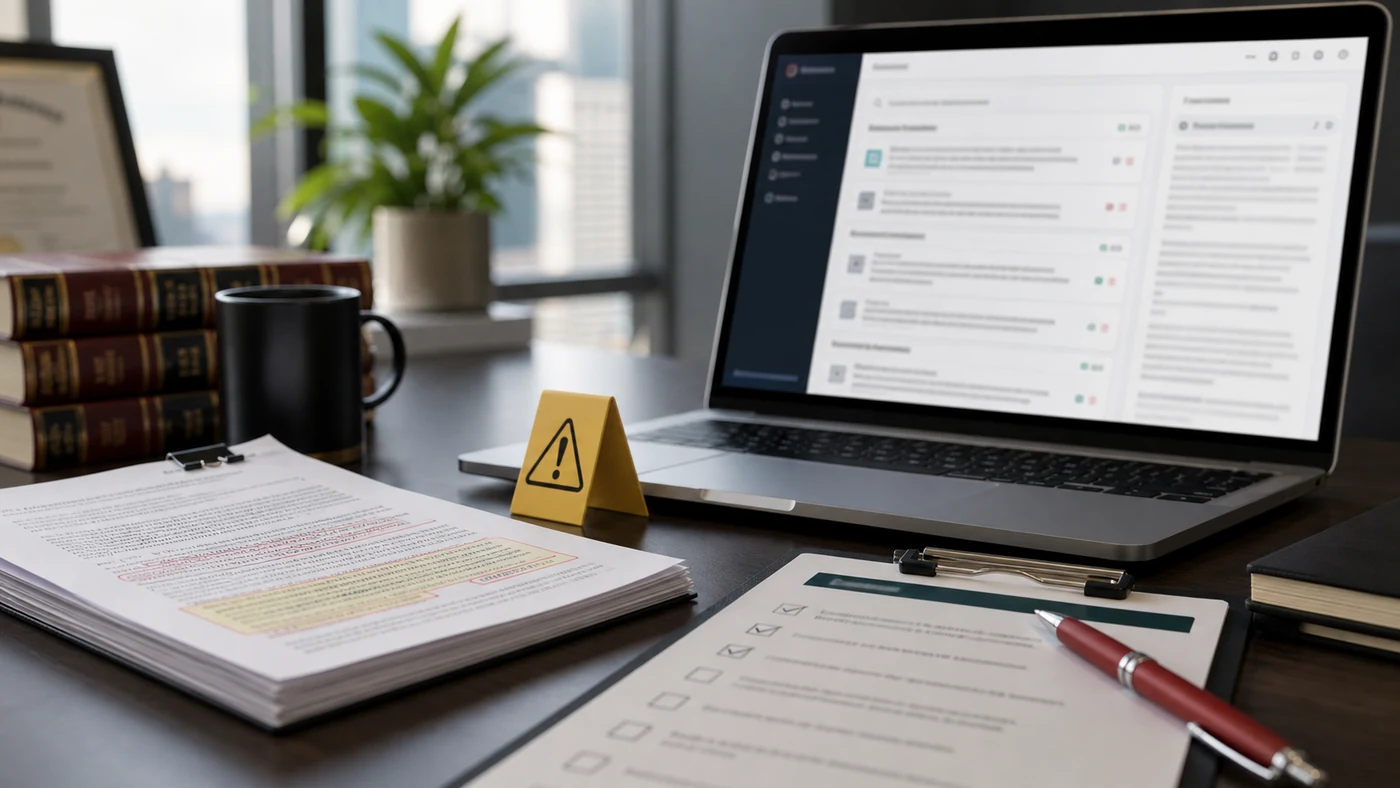
The safest firms will not be the firms that forbid every AI tool. They will be the firms that define where AI belongs and where it stops. AI belongs in the draft, summary, checklist, issue-list, intake-prep, and document-review stages. It does not belong as the final source of law. Every cited case, statute, rule, quotation, procedural deadline, and jurisdiction-specific claim must be checked in a trusted source before it reaches a client, court, public website, or demand letter.
That review should be boring and consistent. If AI suggests a case, someone pulls the case. If it summarizes a statute, someone checks the statute. If it quotes a rule, someone verifies the wording. If it drafts a motion, the attorney confirms the facts, law, requested relief, local rule requirements, formatting, and filing posture. The firm should not have to invent this process every time. It should be part of the way AI work moves through the office.
The ABA's Formal Opinion 512 is useful because it frames generative AI as a professional responsibility issue rather than a novelty. Competence, confidentiality, supervision, communication, candor, and reasonable fees all still apply. In plain language, the lawyer needs to understand the tool well enough to use it responsibly, protect client information, supervise staff use, and review the output before relying on it.
A good policy also explains what to do when something goes wrong. If a citation cannot be found, it is removed. If a claim sounds too specific, it is verified or softened. If a filing has already gone out with a mistake, the firm should correct it quickly and professionally. Courts tend to react far worse when lawyers minimize, conceal, or blame-shift instead of taking responsibility.
Where Legal Growth OS fits in the risk picture
Legal Growth OS is not built around the idea that AI replaces lawyers. It is built around the more useful idea that AI can support attorney-supervised workflows inside the same operating system the firm uses for intake, booking, CRM, documents, and follow-up. That matters because one of the biggest risks with AI is disconnected work: a draft in one tool, a document in another folder, a lead in an inbox, and no clear review trail.
Inside Legal Growth OS, Legal AI is meant to help with preparation: summaries, deadline extraction, issue organization, draft outlines, document review plans, and case-workspace context. Those outputs are not legal advice by themselves, and they are not filing-ready by default. The value is that the work starts organized and remains close to the records the firm is already managing.
For law firms, the right promise is not that AI will never make a mistake. No serious provider should say that. The stronger promise is operational: keep AI scoped, keep firm data isolated, keep attorney review at the center, and make the next step easier to check. Used that way, AI can help a firm become faster without becoming careless. That is the difference between a useful legal workflow and a sanction waiting to happen.
Next step
Use Legal AI with attorney-controlled review
Legal Growth OS helps firms keep AI useful, reviewable, and connected to intake, CRM, case preparation, and document workflows without treating AI output as final legal authority.
Questions answered
Frequently asked questions
Can a lawyer be disciplined for filing AI-generated fake citations?
Yes. Lawyers have already faced sanctions, fee awards, suspensions from practice before specific courts, and disciplinary referrals after filing fake or unsupported authorities generated by AI.
Is it against the rules for lawyers to use ChatGPT or legal AI?
No. AI is generally treated as a tool. The risk comes from filing, publishing, or relying on unverified output. Competent, supervised use requires attorney review and source verification.
Who is responsible if AI invents a fake case?
The lawyer remains responsible for filings and professional obligations. Courts have repeatedly emphasized that the signing attorney cannot shift responsibility to software, staff, clients, or vendors.
How can a firm reduce hallucination risk?
Use approved tools, treat AI output as a draft, verify every citation and quotation in a trusted source, document the review workflow, know local court rules, and correct mistakes promptly if they occur.
Continue the path
Related platform pages
External references
Authority resources
Legal AI Safety