AI-assisted audit workflow
AI-assisted SEO recommendations attorneys can review
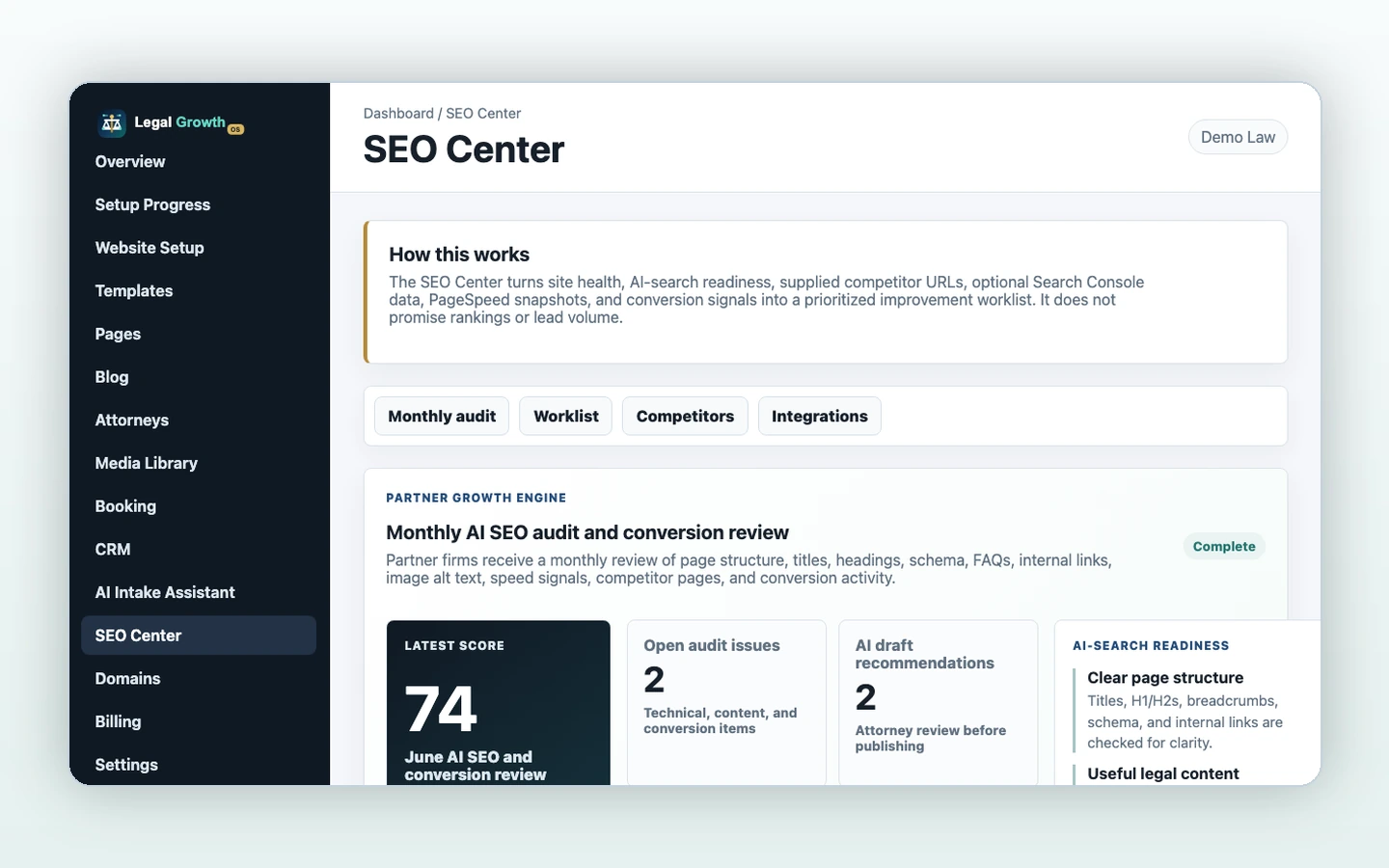
Use AI to organize audit evidence, explain likely impact, and draft metadata, FAQ, internal-link, and conversion improvements without auto-publishing legal content.
Counsel launch support
Start with a working foundation, not an empty dashboard
Counsel includes launch setup and site migration. We help move approved core pages and assets, configure booking and basic intake, connect lead follow-up, and prepare the site for your firm’s review before launch.
Talk through your firm’s setupWhat the firm gets
More consultation opportunities, less tool sprawl
Legal Growth OS is the growth layer for firms that want their website, intake, booking, lead follow-up, Legal AI, and SEO/AEO guidance connected instead of scattered across separate tools.
Professional launch without starting from zero
Use legal-specific templates, firm profile, practice areas, attorney bios, blog content, landing pages, media, CTAs, included setup, and site migration support.
Consultations move into one lead flow
Appointment requests, intake answers, source data, notes, tasks, and follow-up history stay connected so the firm can respond faster and avoid lost opportunities.
Legal AI for drafts, documents, and preparation
Legal AI helps with summaries, outlines, intake context, document review, content drafts, and SEO/AEO preparation while final decisions stay with the firm.
Monthly guidance on what to improve next
Partner reviews turn page structure, competitor pages, Search Console/PageSpeed data, and conversion signals into prioritized growth recommendations.
What it does
Where AI helps in the audit
AI accelerates evidence review and drafting. It does not decide what is legally accurate, guarantee visibility, replace approved data sources, or publish changes without firm review.
Organize the evidence
Group page structure, metadata, links, structured data, local context, approved performance signals, and visible conversion paths into a readable issue list.
Explain likely impact
Translate technical findings into plain language about crawl access, page understanding, local trust, AI-search clarity, or consultation friction.
Draft revisions
Prepare title, meta description, FAQ, internal-link, CTA, and content-outline suggestions for attorney or firm review.
Compare supplied pages
Review firm-supplied competitor URLs for content depth, FAQs, local signals, trust, booking clarity, and mobile presentation without scraping Google directly.
Keep evidence boundaries visible
Mark unavailable data as unavailable and distinguish observed public signals from private analytics, CRM behavior, rankings, or outcomes. Search query data requires Google Search Console connection.
Require human approval
Every recommendation remains a draft until the firm confirms accuracy, advertising compliance, tone, and publishing readiness.
What SEO and AI-search readiness mean here
For a law firm, SEO is the ongoing work of making services, attorneys, locations, and next steps easier for potential clients and modern search systems to understand. The platform identifies issues, prioritizes fixes, and drafts changes for attorney review.
| What the AI checks | Why it matters |
|---|---|
| Titles, meta descriptions, H1/H2 structure | Clarifies the page topic for search engines and visitors. |
| Internal links and sitemap inclusion | Helps important pages stay discoverable inside the site. |
| Alt text, schema, robots, noindex, broken links | Surfaces technical issues that can weaken visibility or trust. |
| Attorney bios, FAQs, local signals, and structured data | Helps AI-assisted search systems understand who the firm is, what it handles, and where it serves clients. |
| Analytics, bookings, forms, CTA clicks | Connects SEO work to consultation behavior, not vanity metrics. |
| Competitor pages supplied by the firm | Shows content gaps, FAQ gaps, local signals, and conversion differences. |
Workflow
From audit evidence to an attorney-reviewable draft
Collect evidence
The audit gathers the public and approved signals available for the page.
Assist the review
AI groups findings, explains them, and drafts practical changes.
Approve deliberately
The firm reviews legal accuracy and decides what should be edited or published.
Legal safety
Built around attorney control
AI content remains in a draft and attorney-review workflow. The intake assistant collects information and can help with booking, but it cannot give legal advice or evaluate case merits.
Draft -> Attorney Review -> Approved -> Published
Practical recommendations, attorney-controlled publishing
Designed with bar advertising rules in mind: no invented awards, results, or imagery
Your firm's data stays isolated
Related features