Scope and evidence sources
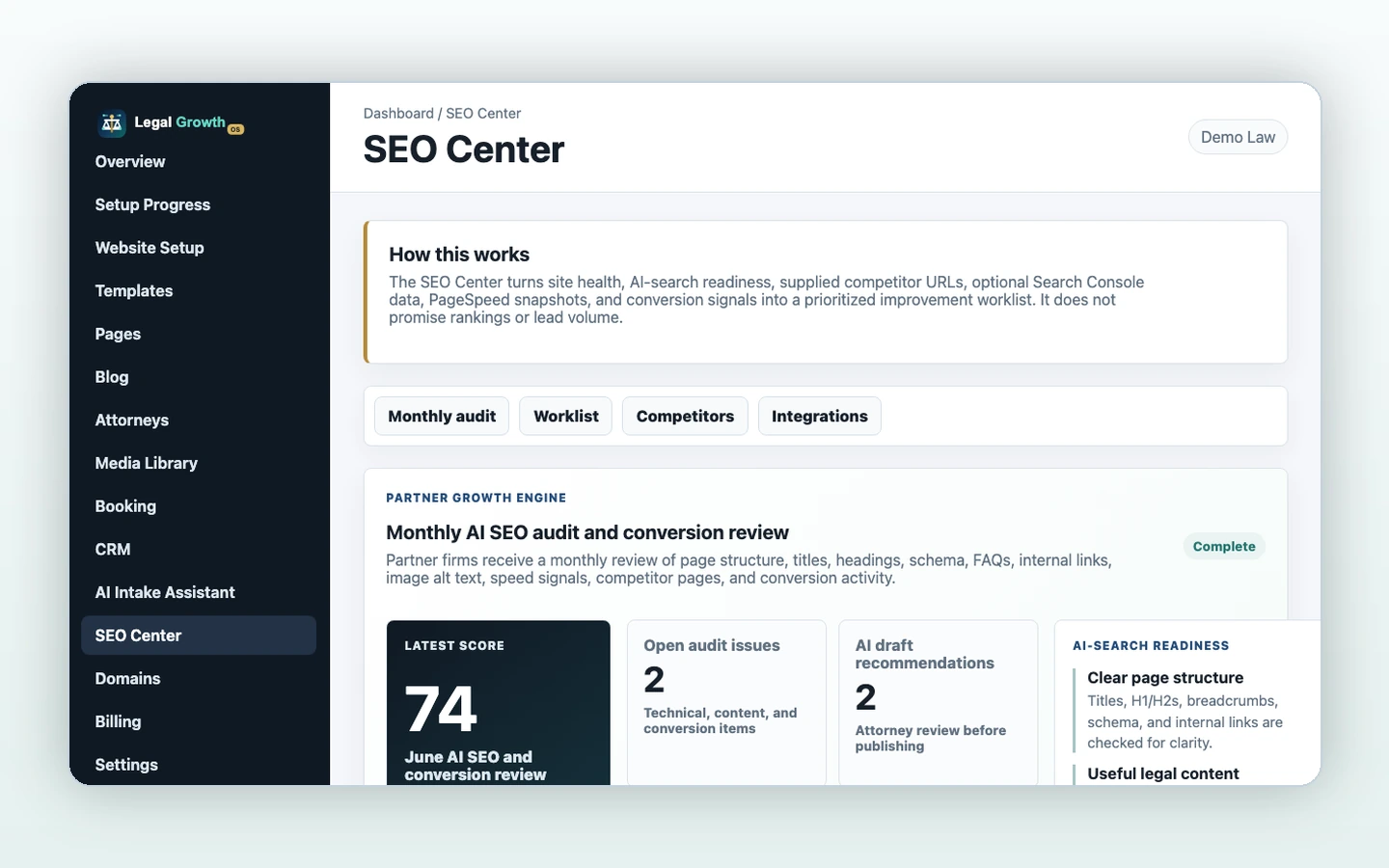
The review uses the submitted public website, visible page content, response and crawl signals, structured data, internal links, sitemap and robots files, and approved external APIs when configured. Private analytics or CRM behavior is not inferred.
Technical and indexing definitions
Checks distinguish accessibility from indexability, canonical consistency from duplication, and a missing signal from an unavailable result. Titles, headings, metadata, image alternatives, broken paths, speed, and mobile behavior are evaluated separately.
Local, content, and AEO evidence
The audit looks for consistent firm identity, office and phone context, attorney and practice-area clarity, direct answers, visible FAQs, descriptive internal links, and structured data that matches the page.
Conversion evidence and limits
The public review can observe calls to action, phone links, booking, intake or contact forms, confirmation language, and visible follow-up expectations. It cannot verify staff response time, lead quality, private CRM activity, rankings, or retained-client outcomes.
Prioritization and worklist
Blocked access and broken consultation paths come first, followed by misleading or missing identity signals, mobile friction, indexation and structure issues, content gaps, and routine metadata improvements. Recommendations remain drafts for firm review.