Review whether each page is clear
Monthly SEO work should begin with page clarity. Important pages need focused title tags, useful meta descriptions, one H1, descriptive H2 headings, internal links, FAQs where helpful, local office context, and calls to action that match the visitor's intent.
For law firms, clarity matters because service pages often carry complex subjects. A page about estate planning, immigration, family law, bankruptcy, criminal defense, or business counsel should explain the consultation path in plain language. It should help a visitor understand what the firm handles before asking for contact information.
Check technical health before chasing new content
Broken links, missing alt text, weak schema, sitemap gaps, robots mistakes, noindex settings, and slow pages can quietly weaken a website. These issues are not glamorous, but they affect whether pages are easy to discover, understand, and use.
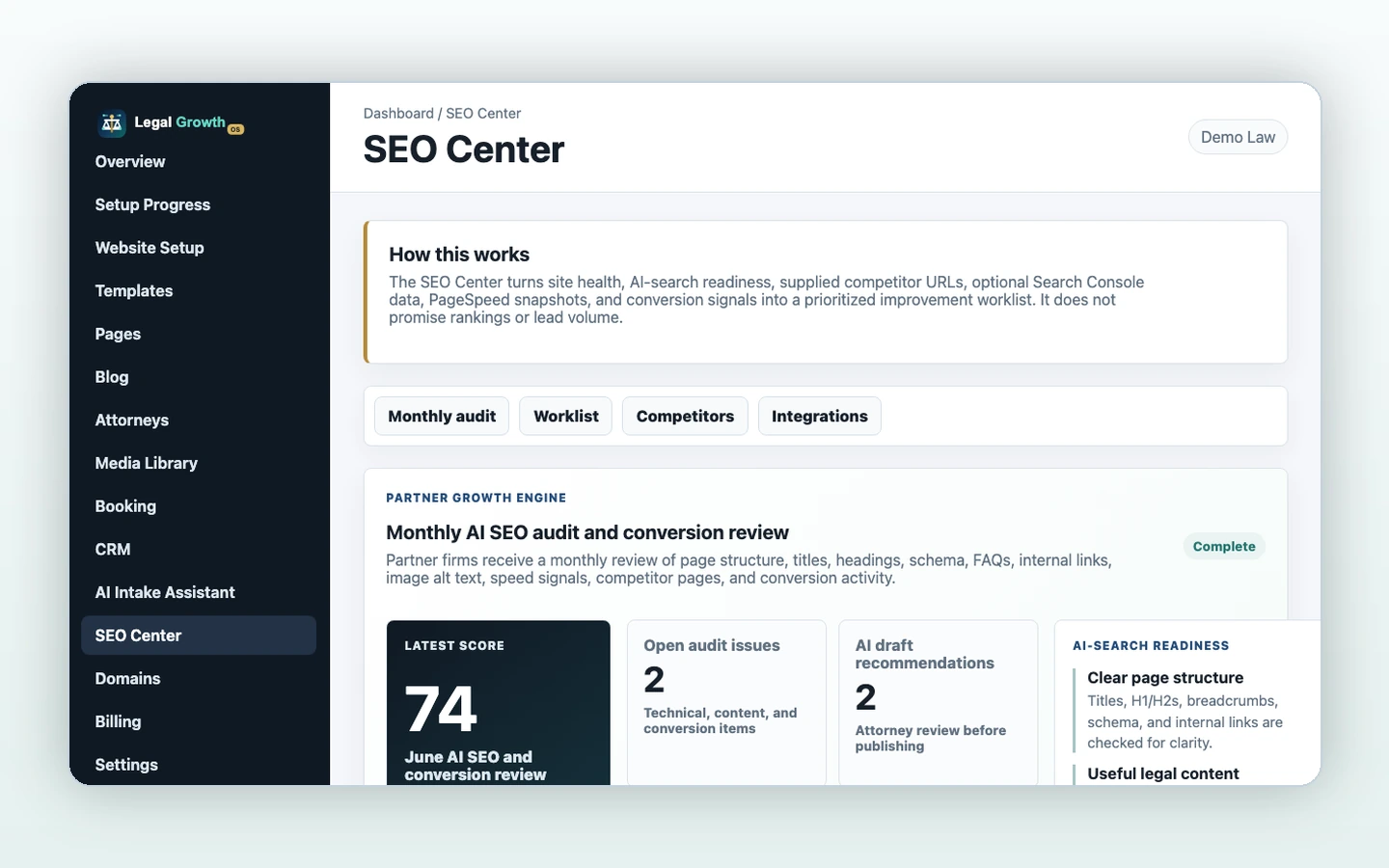
A monthly audit should turn technical findings into a practical worklist. For example, a missing title can become a draft title suggestion, a thin FAQ section can become attorney-review questions, and missing alt text can become safe descriptive suggestions. The point is to create useful fixes, not a vague score.
Connect search signals to conversion signals
Search Console can show impressions, clicks, average position, and queries when connected, but that data is only part of the story. The firm should also review form starts, form completions, booking starts, booking completions, click-to-call activity, CTA clicks, source data, and device behavior.
This combination helps the firm avoid vanity metrics. A page may receive visits but fail to create consultation requests because the form is too long, the CTA is buried, the mobile layout is hard to use, or the service explanation is unclear. SEO and conversion should be reviewed together.
Compare real competitor pages
Competitor review should focus on manually supplied competitor page links or approved data sources, not scraping search results without permission. Useful comparisons look at titles, headings, page structure, FAQs, local signals, attorney bios, schema, speed, booking availability, and CTA clarity.
The goal is not to copy another firm. The goal is to see what information prospects may expect and where the firm's pages are thinner, less clear, or harder to act on. A good monthly review gives the firm a short list of improvements it can actually approve and publish.
Next step
Turn SEO and AI-search readiness into a monthly worklist
Partner includes monthly AI SEO audits, AI-search readiness checks, local competitor comparison, and conversion recommendations that become a practical improvement worklist.
Continue the path
Related platform pages
Legal AI